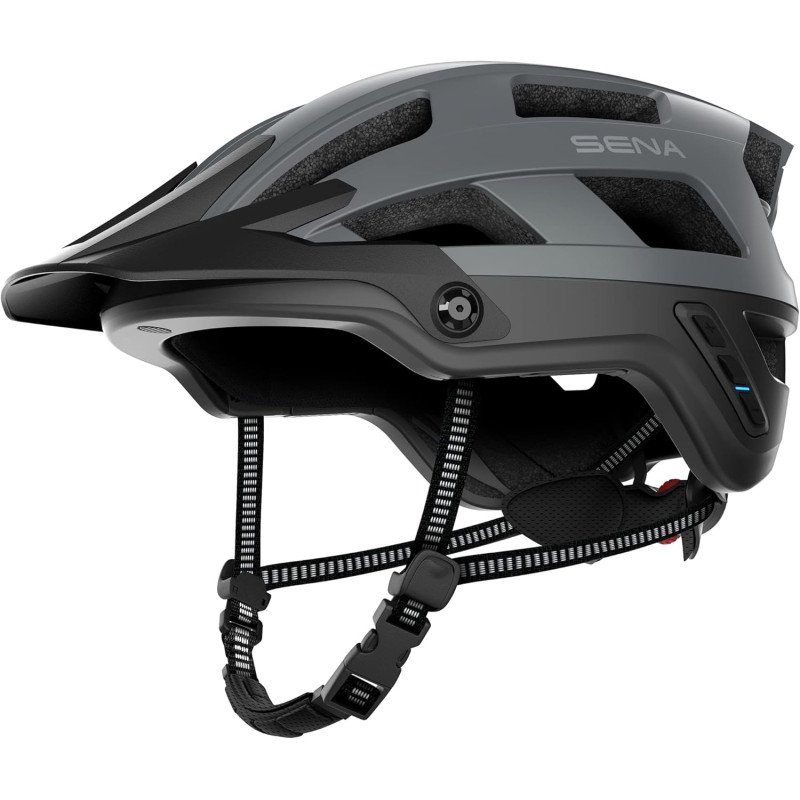
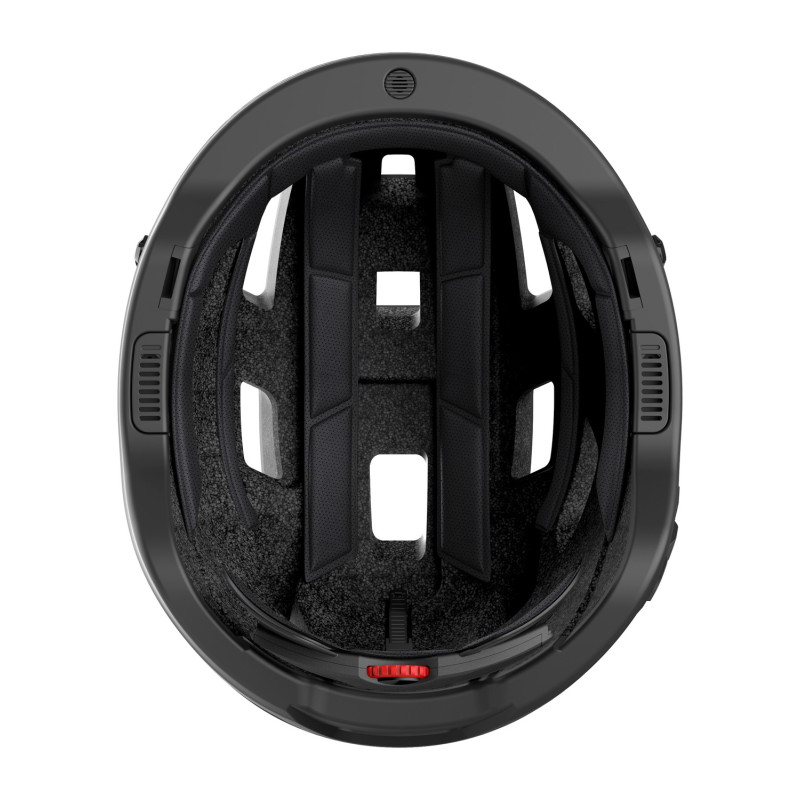
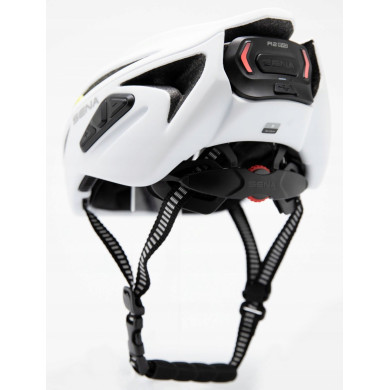
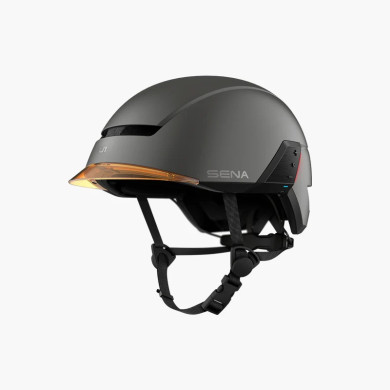
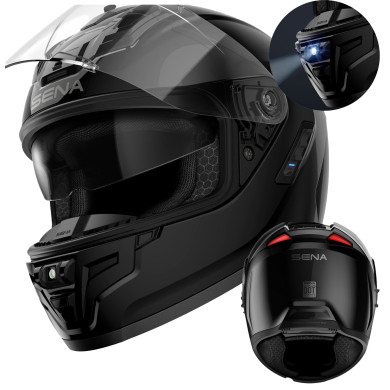
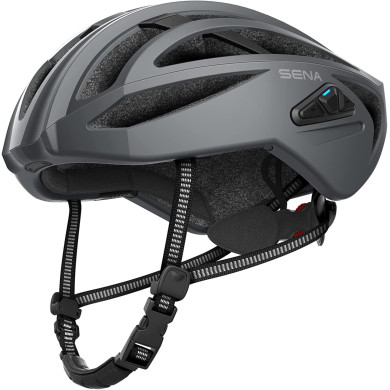
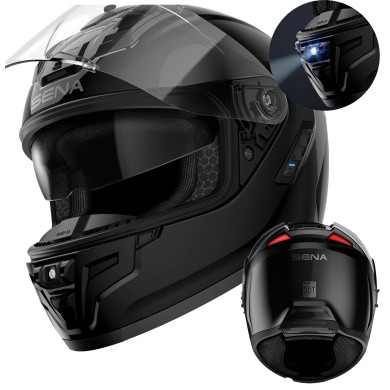
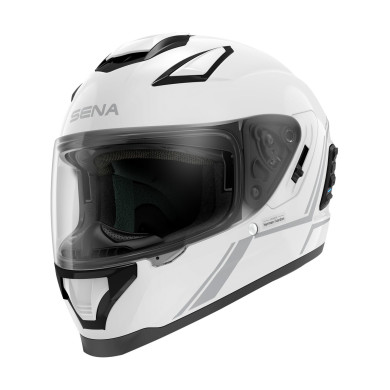
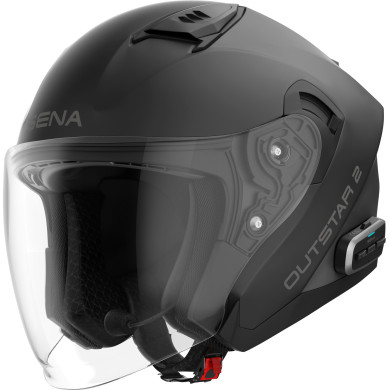
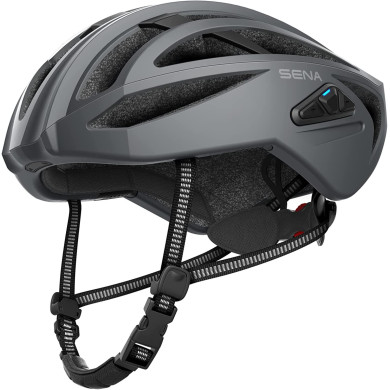
SENA M1 – Specialised MTB/trail helmet with integrated headset and rear LED light.
Helmet:
The headset is integrated in such a way as to interfere as little as possible with the helmet’s appearance and functionality; there are therefore only 3 buttons on the helmet.
Red rear LED light: 3 brightness levels, 3 lighting modes (steady / flashing / slow flashing).
In-mould polycarbonate shell with EPS liner.
Main strap (nylon/leather) with buckle fastening, rear retention system.
Weight 430 g (size M).
ECE approved
Headset:
Range up to 0.9 km in open terrain.
Ability to communicate with up to 3 other helmets or headsets.
Thanks to Bluetooth 4.1 and Advanced Noise Control™, you can also use the headset to control your mobile phone, listen to navigation instructions (or fitness apps) or listen to music in MP3 format.
Integrated front microphone and HD-quality earphones.
A handlebar remote control is available as an optional extra.
Maximum talk time: 11–18 hours
Charging time: 2.5 hours
Quick charge: 20 minutes of charging = 3 hours of use.
Set up using theSENASmartphone App
Sizes:
M: head circumference 55–59 cm
L: head circumference 59–62 cm
SENA M1 – Specialised MTB/trail helmet with integrated headset and rear LED light.
Helmet:
The headset is integrated in such a way as to interfere as little as possible with the helmet’s appearance and functionality; there are therefore only 3 buttons on the helmet.
Red rear LED light: 3 brightness levels, 3 lighting modes (steady / flashing / slow flashing).
In-mould polycarbonate shell with EPS liner.
Main strap (nylon/leather) with buckle fastening, rear retention system.
Weight 430 g (size M).
ECE approved
Headset:
Range up to 0.9 km in open terrain.
Ability to communicate with up to 3 other helmets or headsets.
Thanks to Bluetooth 4.1 and Advanced Noise Control™, you can also use the headset to control your mobile phone, listen to navigation instructions (or fitness apps) or listen to music in MP3 format.
Integrated front microphone and HD-quality earphones.
A handlebar remote control is available as an optional extra.
Maximum talk time: 11–18 hours
Charging time: 2.5 hours
Quick charge: 20 minutes of charging = 3 hours of use.
Set up using theSENASmartphone App
Sizes:
M: head circumference 55–59 cm
L: head circumference 59–62 cm
JAK DOBRAĆ ROZMIAR KASKU?
Wybór odpowiedniego rozmiaru kasku motocyklowego to kluczowy krok w zapewnieniu maksymalnego bezpieczeństwa i komfortu jazdy. Kask nie może być ani za luźny, ani za ciasny – musi idealnie przylegać do głowy. Jak dobrać właściwy rozmiar? Oto szczegółowy poradnik krok po kroku. Przygotowaliśmy dla Ciebie instrukcję w jaki sposób dobrać odpowiedni rozmiar kasku.
Krok 1: Zmierz obwód głowy
Przygotuj miarkę krawiecką – elastyczna taśma pozwoli dokładnie zmierzyć obwód głowy. Jeśli jej nie masz, użyj sznurka i zmierz jego długość linijką.
Umieść miarkę nad brwiami – owiń ją wokół głowy, tuż nad uszami i w najszerszym miejscu potylicy.
Odczytaj wynik – warto zmierzyć dwukrotnie, aby upewnić się, że pomiar jest dokładny.
Krok 2: Dopasuj wynik do tabeli rozmiarów
Porównaj swój obwód głowy z dostępnymi rozmiarami kasków z tabeli poniżej. Jeśli Twój pomiar znajduje się na granicy dwóch rozmiarów, zaleca się przymierzenie obu – w zależności od marki kasku mogą występować niewielkie różnice w dopasowaniu.
53-54 cm
55-56 cm
57-58 cm
59-60 cm
61-62 cm
63-64 cm
Krok 3: Przymierz kask i oceń dopasowanie
Załóż kask - powinien wejść na głowę z lekkim oporem, ale bez nadmiernego ściskania.
Sprawdź ucisk - kask powinien mocno przylegać do policzków i czoła, ale nie powodować bólu. Jeśli po kilku minutach odczuwasz dyskomfort, rozważ większy rozmiar.
Wykonaj test ruchu - delikatnie potrząśnij głową na boki i do góry-dół. Jeśli kask się przesuwa, jest za duży.
Sprawdź szczelność - włóż palce między kask a skórę. Jeśli masz na to zbyt dużo miejsca, rozważ mniejszy rozmiar.
Zostaw kask na 10-15 minut - jeśli po tym czasie nie czujesz ucisku i dyskomfortu, rozmiar jest prawidłowy.
Krok 4: Uwzględnij dopasowanie do użytkowania
Kaski sportowe i torowe są zwykle ciaśniejsze, aby zapewnić maksymalną stabilność przy dużych prędkościach.
Kaski turystyczne mogą być nieco luźniejsze dla większego komfortu na długich trasach.
Nowy kask zawsze lekko się układa - wkładki wewnętrzne delikatnie się dopasują po kilku jazdach, ale nie powinien być luźny od początku.
Only users who already bought the product can add review.
Sort By
No customer reviews for the moment.
SENA M1 – Specialised MTB/trail helmet with integrated headset and rear LED light.
Helmet:
The headset is integrated in such a way as to interfere as little as possible with the helmet’s appearance and functionality; there are therefore only 3 buttons on the helmet.
Red rear LED light: 3 brightness levels, 3 lighting modes (steady / flashing / slow flashing).
In-mould polycarbonate shell with EPS liner.
Main strap (nylon/leather) with buckle fastening, rear retention system.
Weight 430 g (size M).
ECE approved
Headset:
Range up to 0.9 km in open terrain.
Ability to communicate with up to 3 other helmets or headsets.
Thanks to Bluetooth 4.1 and Advanced Noise Control™, you can also use the headset to control your mobile phone, listen to navigation instructions (or fitness apps) or listen to music in MP3 format.
Integrated front microphone and HD-quality earphones.
A handlebar remote control is available as an optional extra.
Maximum talk time: 11–18 hours
Charging time: 2.5 hours
Quick charge: 20 minutes of charging = 3 hours of use.
 Flip Up Helmets
 Integral helmets
 Cross helmets
 Open face helmets
 Children's helmets
 Helmets with intercom
 Glazing and parts
 Google
 Intercoms
 Boosters
 Bicycle helmets with intercom
 Gloves
 Mantels